La Pacanda: the island where memory speaks in many voices
Among the islands of Lake Pátzcuaro, La Pacanda needs no promise of perfect silence to have a rich cultural life. Its inhabitants, homes, journeys and the voices that give names to places make up a living territory. The landscape changes when we stop imagining the island as somewhere designed to receive visitors and begin to see it as a place where people build their everyday lives.
The memory of Pacanda has been documented by researchers at the National Laboratory of Oral Materials (LANMO) of the National Autonomous University of Mexico (UNAM). The volume Lo que el dios traía. Relatos de Pacanda (What the God Brought: Stories from Pacanda), publicly presented in May 2026, brings together accounts recorded in interviews conducted in 2015 and 2016. Those voices offer a more rigorous point of entry than the adjectives often used in tourist promotion: “more authentic,” “quieter,” or “open to everyone.”
An island is more than a night-time destination
The collection coordinated by Berenice Granados and Santiago Cortés records residents’ narratives and ways of understanding the relationship between place, memory and imagination. Its editors explain that they selected materials tied to life on the island rather than assembling unrelated legends from beyond the residents’ own storytelling networks.
This method teaches an essential lesson. One resident’s story cannot be turned into a supposed truth shared by every islander, still less into a claim about what has “always been done.” Family memories, stories about places, shared narratives and differing explanations belong to different kinds of evidence. Research allows us to listen and attribute them; it does not make them interchangeable.
The lake is also home and route
In a study published in 2023, Ana Emma Zavala Loaiza and Catherine Ettinger examined the form of settlements on Yunuén, Pacanda and Jarácuaro. Their work relates the built environment to landscape and to the perceptions of the people who live there. Houses, meeting places and waterways belong to a real community, not to scenery arranged for a nocturnal festival.
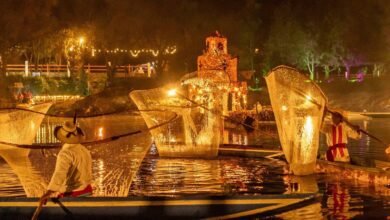
During the Festival of Souls, this reality matters even more. Travel to an island depends on boats, landing places, agreements and conditions on the lake. A crossing that is common during part of a season is not therefore available all night, and the fact that an island receives visitors does not mean every place on it is open to them.
An offering is not permission to enter
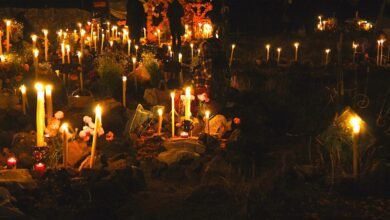
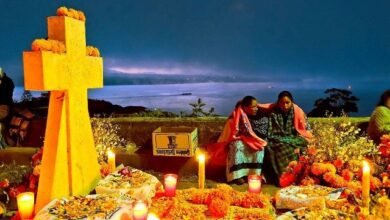
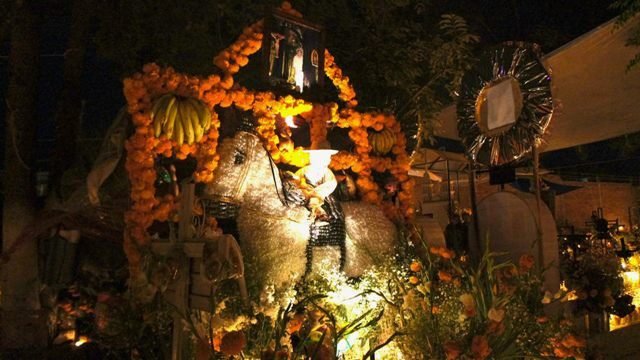
The Indigenous festivities dedicated to the dead, recognised by UNESCO as part of Mexico’s intangible cultural heritage in 2008, include offerings, flowers, candles and connections between living relatives and those who have died. That description provides a broad cultural framework. It does not establish that every household on Pacanda opens its altar, that a vigil has a fixed public schedule or that a visitor is entitled to join a family’s ceremony.
The previous article promised a peaceful experience without crowds, set out a specific sequence for the souls’ arrival and took a domestic exchange of offerings for granted. Those statements turned possible regional customs into supposed rules for Pacanda itself. The sources consulted do not support presenting them as practices of the entire community.
A more faithful account begins elsewhere: remembrance of the dead is woven into family relationships and beliefs. To describe the precise forms a given year’s observance takes, we would need contemporary local testimony or confirmed notices. Respect for mourners cannot be replaced by a list of attractions.
The name and the stories surrounding it
Regional studies give more than one explanation of the place name Pacanda. The evidence in this editorial record is insufficient to choose any single interpretation as the definitive etymology. The variety of stories and spellings deserves to be presented with attribution, rather than treating an oral explanation as a settled linguistic finding.
LANMO’s publications show that an island’s narrative heritage is not exhausted by a single legend. It is also found in the ways residents remember, select and debate what happened. The listening that made this documentation possible was conducted by university researchers; this magazine has not interviewed the narrators. Their scholarship is cited, not passed off as our own fieldwork.
Arriving without false promises
La Pacanda is reached by boat, but round-the-clock boat service has not been verified, nor has general permission to enter private homes or an accommodation offer valid on every date. Services, embarkation points, weather and conditions of access must be checked with local providers and authorities before visiting. Restrictions or arrangements announced for Janitzio or another island must not be transferred to Pacanda without evidence.
The best invitation is not the promise that a silent island will be waiting for a camera. It is the recognition that Pacanda has its own voices and a history that continues whether or not anyone is there to record it.
Sources and provenance
- Lo que el dios traía. Relatos de Pacanda. LANMO-UNAM publication catalogue; interviews recorded in 2015–2016. LANMO catalogues a first edition in 2025 and identifies its electronic ISBN; interviews were documented in 2015–2016. UNAM Libros records the printed first edition as 2026.
- Presentación editorial de Lo que el dios traía. Relatos de Pacanda. Public presentation recorded for 28 May 2026; this is an event date, not necessarily the edition year.
- Morfología y percepción social de los asentamientos de las islas de Yunuén, Pacanda y Jarácuaro. Peer-reviewed 2023 research on island settlement, landscape and inhabitants’ perceptions.
- Repositorio de la Zona Lacustre de Michoacán. University oral-history repository and research methods.
- Las fiestas indígenas dedicadas a los muertos (expediente 00054). UNESCO recognition of Indigenous Mexican festivities as a whole, not a separate Pacanda inscription.
- Ficha bibliográfica de Lo que el dios traía. Relatos de Pacanda. UNAM bibliographic record. The printed edition is dated 2026 (ISBN 9786076424780); LANMO’s editorial catalogue separately lists 2025.
Editorial scope: Document-based translation of the approved Spanish master. No new interviews, no new access assurances and no live WordPress changes.