Cuanajo: the wooden horse that carries remembrance home
In Cuanajo, wood can follow two paths that seem far apart: it can become furniture for everyday life, or take the form of a horse intended to accompany the dead. Both bear the work of a community with a long craft tradition. During the Festival of Souls, however, that small, motionless animal acquires, within ritual imagination, the task of carrying what families have prepared for those who are gone.
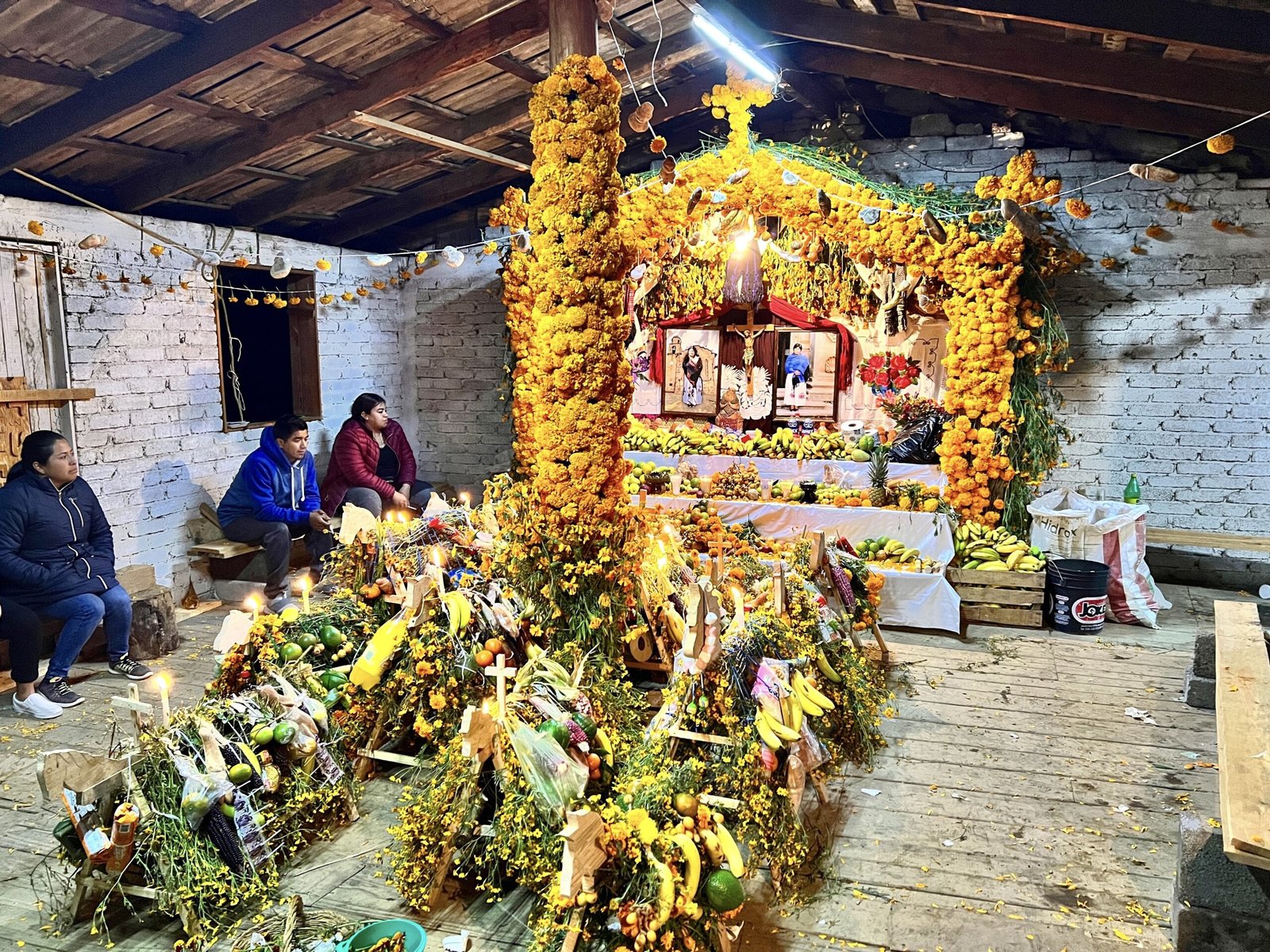
This is neither a living horse, nor a theatrical performance, nor an obligatory souvenir. It is a figure surrounded by fruit, flowers, bread and candles, whose meaning has been explained by residents of Cuanajo to journalists documenting the festivities. The little horse helps the soul carry its offering: that is the belief behind its presence. It is a community account, not proof of a supernatural event.
An offering in a home belongs to someone
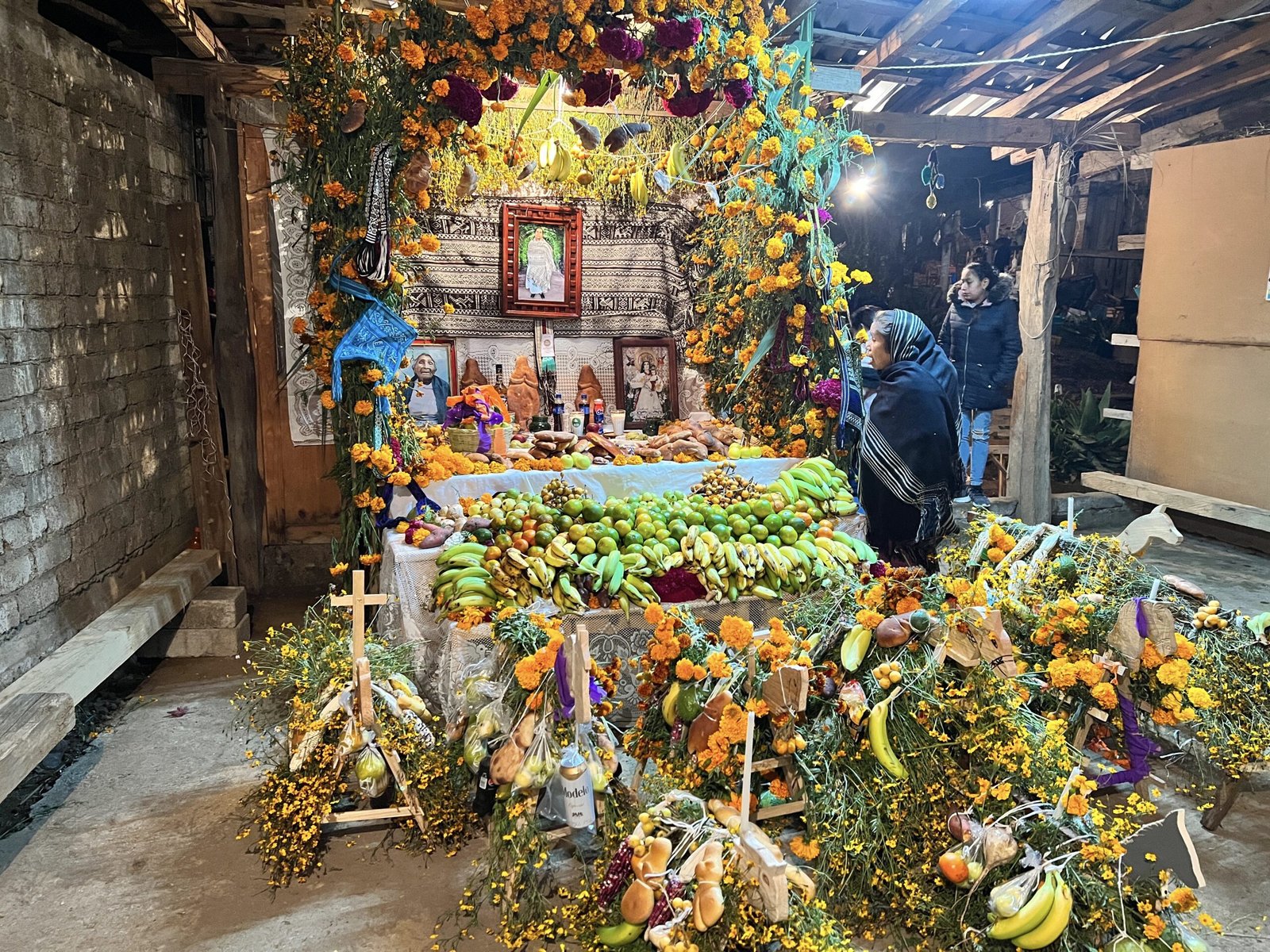
A Cambio de Michoacán report dated November 2, 2024 followed a family preparing an altar for a relative who had died that year. The story reveals a crucial difference: Cuanajo’s highly visible public celebrations do not replace the private work inside each home. Where mourning is recent, an offering is addressed to a particular person. The table, flowers and food are not simply regional decorations. Someone is expected.
Other accounts from 2024 describe people carrying fruit and candles, sometimes in baskets covered with embroidered cloths, while decorating the wooden horses. They also describe visiting and sharing food as reciprocal gestures. Those details come from specific speakers and dates. They must not be turned into universal rules about who carries the horse, prepares a basket or serves a meal.
The horse and the patience of skilled hands
A little wooden horse need not be a perfect likeness of the animal to be recognizable. Its outline is enough to bear the meaning. Marigolds and fruit change its appearance; the candle places it on the luminous path that many Mexican offerings prepare for the souls. Mexico’s federal Ministry of Culture has highlighted this distinctive practice within the wider context of Indigenous festivities dedicated to the dead.
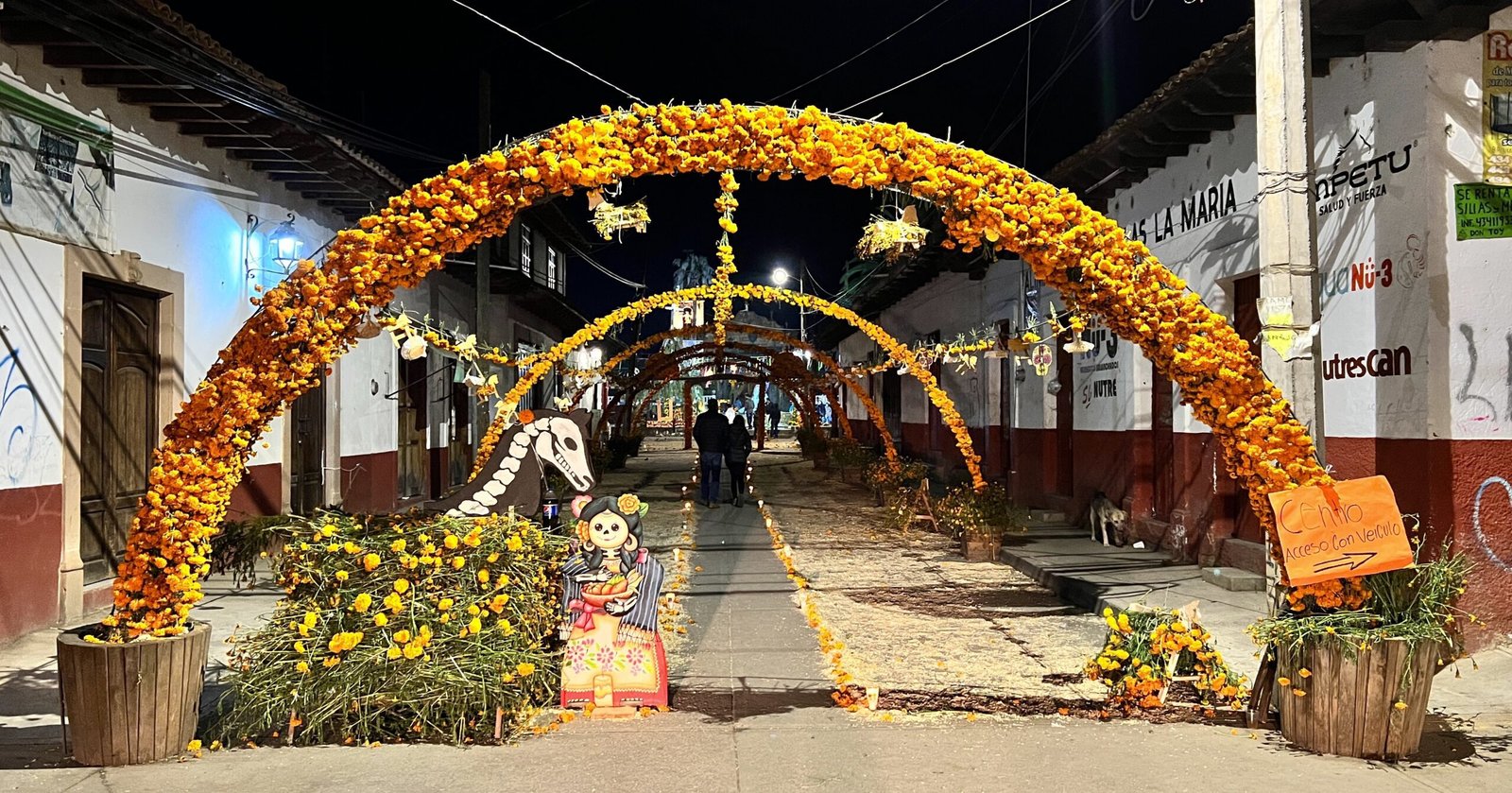
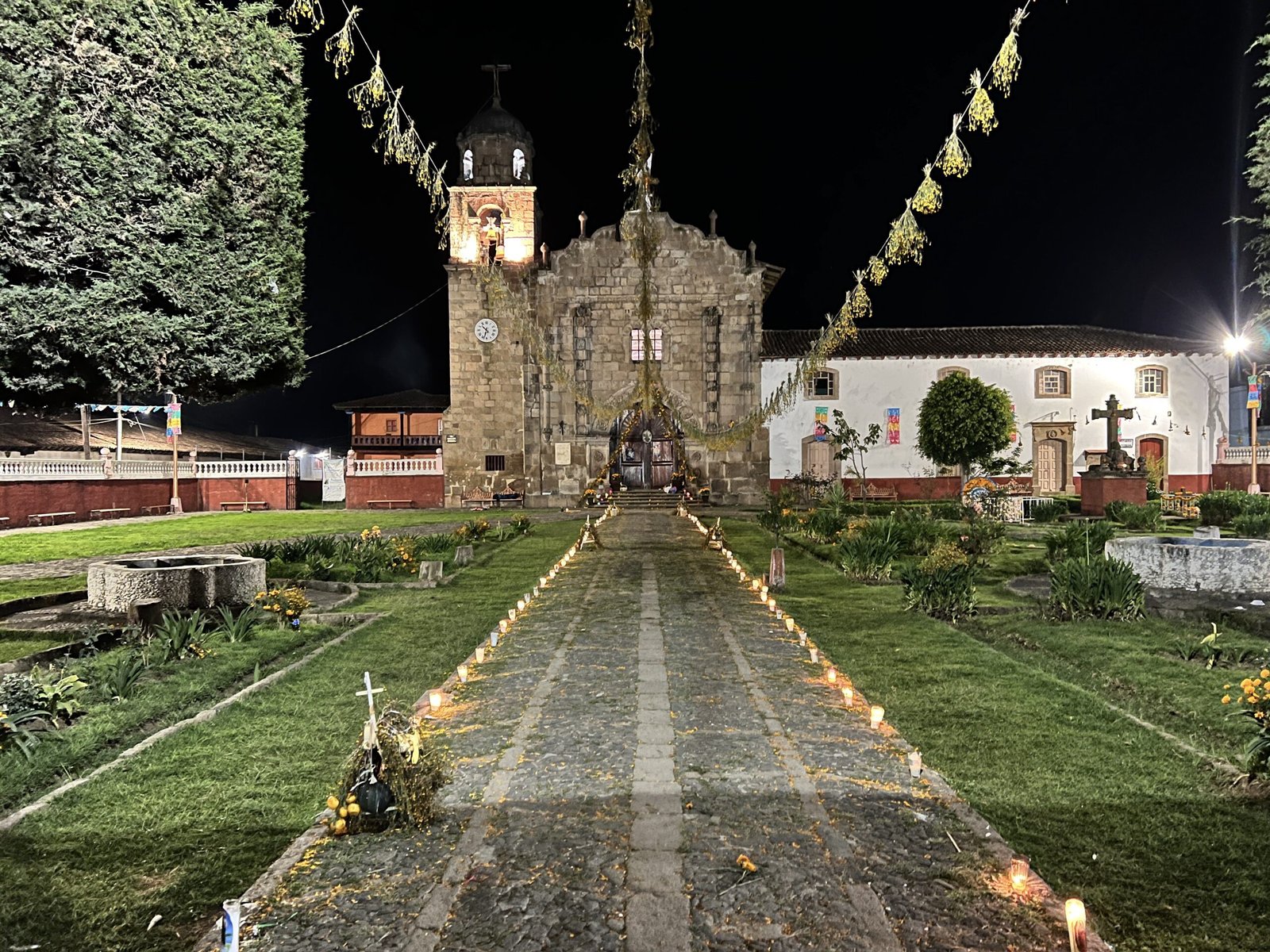
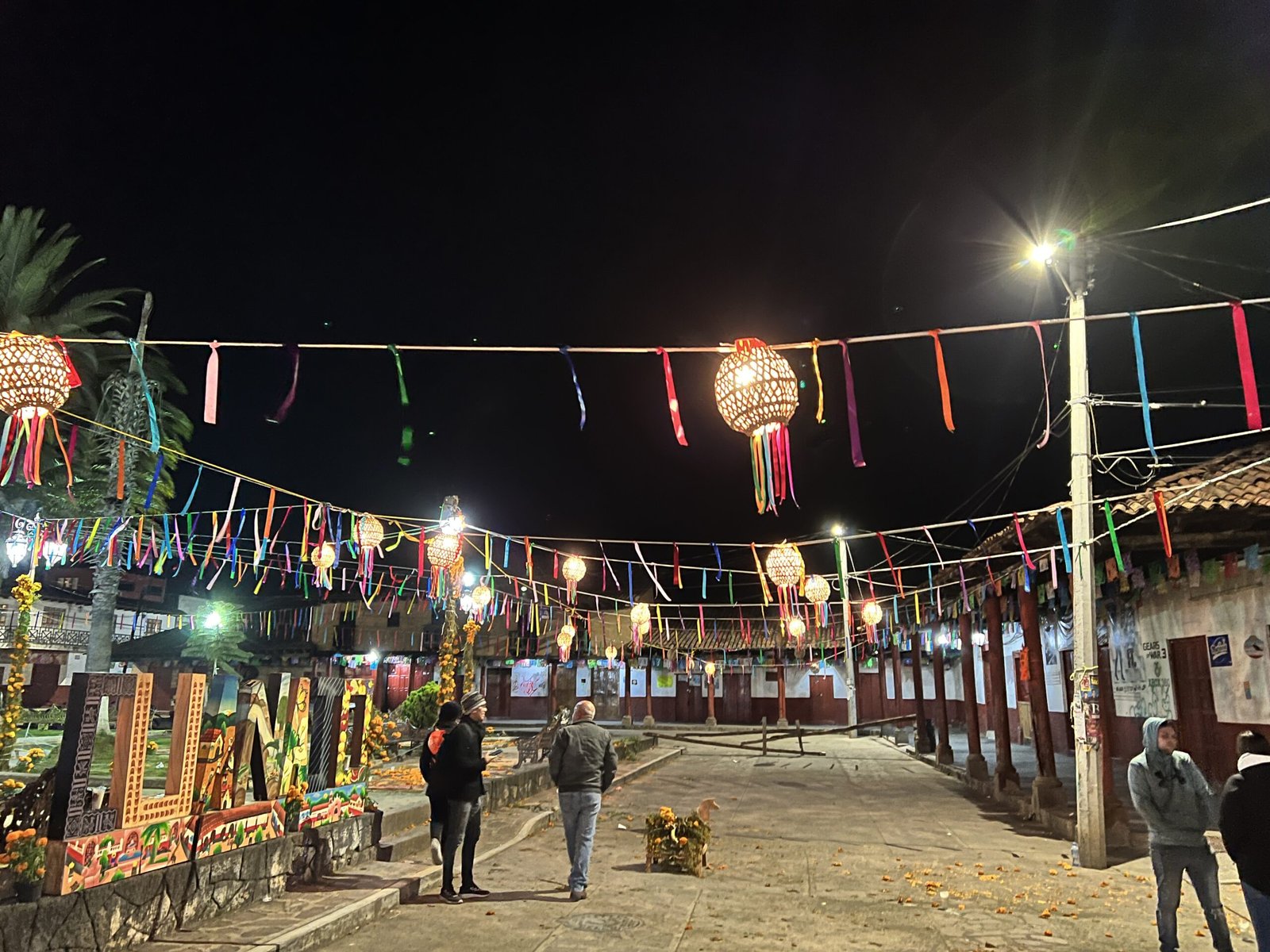
Cuanajo has also erected monumental horses in its square. They are public images for residents and visitors, separate from private offerings. Their scale makes it possible to share an aspect of the tradition; it does not give anyone the right to enter a home or turn a family’s grief into a show.
More than a November postcard
The tradition’s deeper meaning lies in the relationship between those who remember and those who accompany them. In a symbolic reading, the little horse carries more than bread or fruit: it expresses the wish that no deceased loved one should return without someone waiting. This is a literary interpretation of a documented belief, not a quotation attributed to a particular resident.
The available sources concern earlier celebrations, especially 2023 and 2024. They do not, by themselves, confirm that homes, contests, timetables, transport or community routes will be open or available in 2026 or any later edition. Visitors should consult current notices and follow their hosts’ guidance. Respect begins with understanding that offerings were not made for tourists.
One tradition among many
UNESCO recognizes the Indigenous festivities dedicated to the dead in Mexico, inscribed on the Representative List in 2008 after an original proclamation in 2003. This recognition does not belong exclusively to Cuanajo, nor does it imply that all Purépecha communities commemorate in the same way. The little horse matters precisely because it is a particular expression of remembrance and reciprocity.
Wood is no longer merely inert material. In the documented practices of Cuanajo, it is a way of saying that absence still has a place at the table.
Editorial note: This account draws on dated publications, not new interviews. No household access or 2026 visit arrangements have been independently confirmed.
Documentary sources (original titles)
- Secretaría de Cultura federal. Día de Muertos, una de las celebraciones fundamentales de la cultura mexicana. Contexto institucional de la ofrenda de Cuanajo. Tipo: institucional / histórica.
- Josimar Lara, MiMorelia. Conoce el significado del caballito de madera de Cuanajo. 2 de noviembre de 2024; atribuye explicaciones a habitantes. Tipo: testimonio periodístico fechado.
- Cambio de Michoacán. Altares monumentales en casa, la tradición en Cuanajo. 2 de noviembre de 2024; crónica familiar identificada. Tipo: crónica periodística fechada.
- Gobierno de Michoacán. Llegan a caballo las ánimas a Cuanajo. 31 de octubre de 2023; descripción institucional. Tipo: institucional / noticia histórica.
- UNESCO. Las fiestas indígenas dedicadas a los muertos (expediente 00054). Reconocimiento mexicano general, no inscripción exclusiva de Cuanajo. Tipo: registro patrimonial.
Original Spanish titles and publication details are retained in the bibliography for accurate source identification.