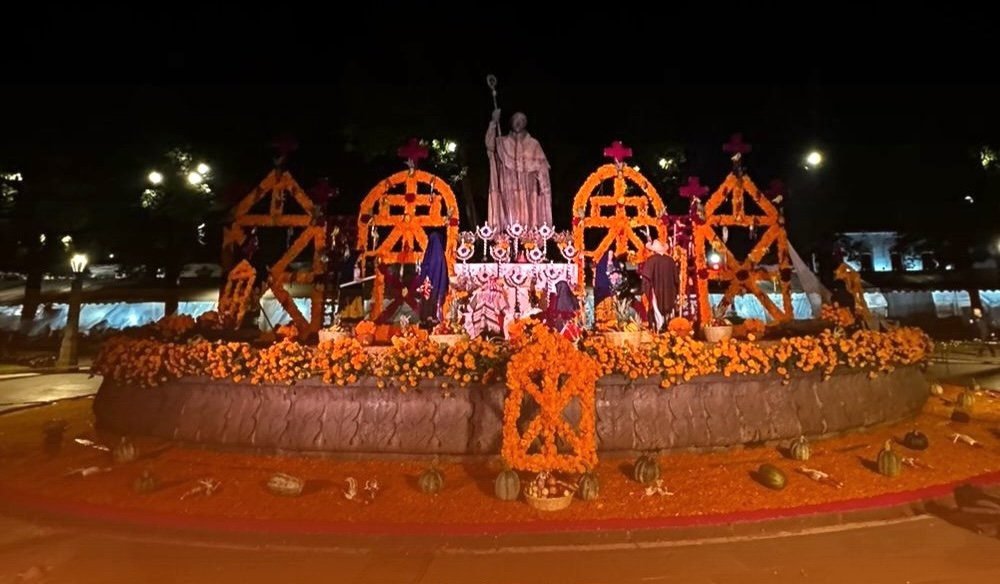
Pátzcuaro: a city that opens doors without claiming ownership of the souls
Pátzcuaro’s past does not belong to a single era. Beneath the roof tiles of a colonial building lies the memory of an earlier city; behind a square, the urban transformations of the sixteenth century are still visible. When November comes, its streets welcome people hoping to learn about the Festival of Souls. But the movement of so many visitors does not make the municipal centre the owner of the lakeside communities’ remembrance.
A city may bring roads together without being the sole origin of everything that travels along them. That distinction is essential to telling the story of the Festival of Souls without reducing it to a tourist brand.
The weight of an old city
Mexico’s National Institute of Anthropology and History (INAH) describes a pre-Hispanic settlement linked to Purépecha political history and the urban transformation of Pátzcuaro under Vasco de Quiroga. Its documentation recalls the relocation of the bishop’s seat, the foundation of educational and charitable institutions, and buildings that combine different periods. This history cannot be compressed into a slogan about colonial charm: it concerns shifts of authority, social organization, religion and work.
In 1990, the Historic Monuments Zone of Pátzcuaro was declared. INAH describes an area of 42 urban blocks containing more than 300 historically significant buildings. The Vasco de Quiroga and Gertrudis Bocanegra squares, along with churches, belong to an urban fabric whose uses have changed over time.
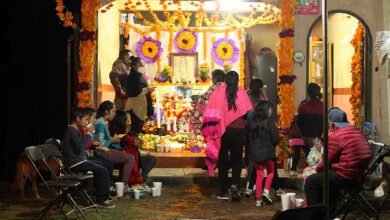
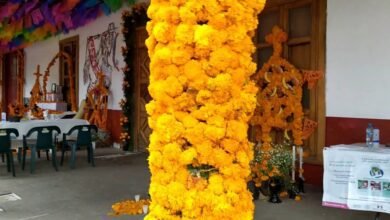
Walking these spaces during the Day of the Dead season, visitors encounter public activities, shops, workshops and gatherings. This urban setting is not identical to the place where a family welcomes a deceased loved one.
What happens in the square, and what happens at home
An entry in Mexico’s Cultural Information System, updated in 2013, records the seasonal craft market and other public activities associated with November. It helps document a history of recurring events, but its descriptions and times cannot be treated as an official schedule for 2026. State announcements that year also described offerings and vigils in Michoacán communities; they inform the public about the season without replacing each family’s account.
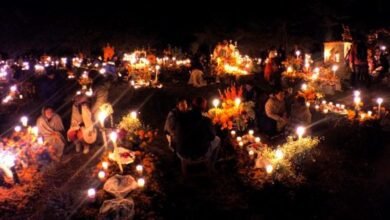
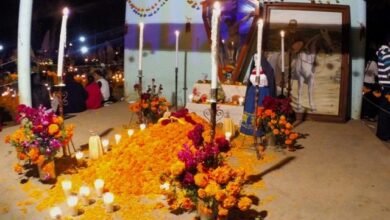
Squares bring people together; institutions organize; businesses welcome visitors. In homes and burial grounds, however, remembrance follows rhythms and boundaries of its own. Confusing these places would turn mourning and reciprocity into another item on an entertainment calendar.
Recognition that does not belong to one city
In 2003, UNESCO proclaimed the Indigenous festivities dedicated to the dead in Mexico; in 2008, the expression was inscribed on its Representative List of the Intangible Cultural Heritage of Humanity. File 00054 concerns a broad Mexican cultural practice. It does not constitute an individual inscription of Pátzcuaro, Janitzio or any other single locality.
Purépecha celebrations are central to Michoacán’s cultural landscape, but international recognition does not allow Pátzcuaro to claim the exclusive origin of Day of the Dead. Mexican history contains a diversity of calendars, languages and ways of remembering. Accuracy means leaving space for that plurality.
Learning to stay, rather than collecting stops
Pátzcuaro offers an entry point to an interlinked region of islands and lakeside villages with different traditions. Cuanajo does not simply repeat Tzintzuntzan; a family’s home vigil is not the same as a municipal exhibition; and a restriction on access must be respected even when a public programme has been announced.
Promotional images often urge travellers to hurry from one destination to the next, trying to see everything. The Festival of Souls invites the opposite attitude: knowing that a night is also made of absences, silences and times that do not belong to us.
Pátzcuaro can be a valuable doorway to that understanding. Its richness lies not in proclaiming itself the owner of the festival, but in remembering that beyond the city begins a region speaking in many voices.
Scope note: This is literary documentary writing based on published sources. No new interviews, checks of family access or on-site verification were conducted. Dated announcements must not be treated as permanent programmes.
Documentary sources (original titles)
- Instituto Nacional de Antropología e Historia. Pátzcuaro — Lugares INAH. Ficha institucional consultada el 2 de noviembre de 2026. Geografía, patrimonio urbano, historia de Vasco de Quiroga y decreto 1990. ficha de patrimonio histórico.
- INAH. Guía de Pátzcuaro. Edición de aniversario institucional (guía histórica). Historia del espacio urbano y Plaza Vasco de Quiroga; decreto de monumentos. guía institucional.
- Sistema de Información Cultural — Secretaría de Cultura. Noche de Muertos en Pátzcuaro. Ficha modificada el 6 de marzo de 2013. Registro del calendario y de actividades culturales, no cronograma vigente 2026. registro histórico institucional.
- UNESCO. Las fiestas indígenas dedicadas a los muertos (00054). Proclamación 2003; inscripción 2008. Acredita reconocimiento mexicano general, nunca declaración exclusiva de Pátzcuaro. registro patrimonial.
- Gobierno de Michoacán / Sectur. Panteones de Michoacán se iluminan para recibir a las ánimas en Noche de Muertos. 1 de noviembre de 2026. Comunicación estatal de la edición 2026, no observación etnográfica de cada hogar. comunicado institucional fechado.
Original Spanish titles and publication details are retained in the bibliography for accurate source identification.