Zirahuén: an embroidered cloth waiting for the souls
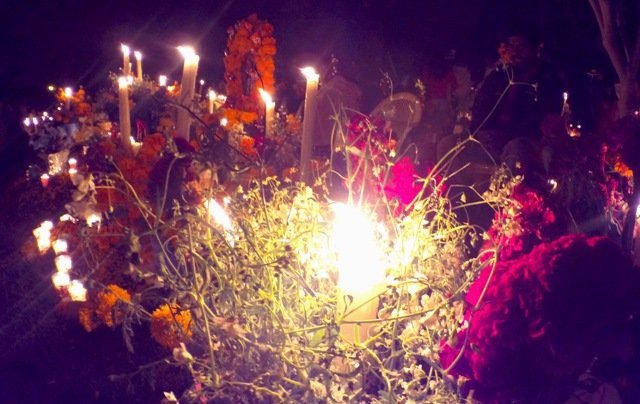
There is a way of remembering that begins long before a candle is lit. In Zirahuén, a town in the municipality of Salvador Escalante, accounts of the commemoration describe embroidered cloths placed over graves. Stitches worked across days or weeks create a surface on which food, flowers and the memory of a person are received. In the practices recorded by journalists and university researchers, that cloth is not an incidental decoration. It identifies an offering prepared by a family.
Zirahuén stands beside a lake distinct from Lake Pátzcuaro. Its forests and waters have made the town widely known, but commemoration needs no supernatural powers attributed to the scenery. The story worth telling unfolds not in the lake’s reflections, but in the relationship between hands, cloth, burial places and remembered names.
Stitches are remembrance, too
A El Universal article published on November 3, 2019, described cross-stitched tablecloths laid over graves. The reporter attributed the work to women in local families and noted the care given to each piece. A university outreach article in Saber Más had likewise described hand-embroidered white cloths and the preparation of food during the days of remembrance.
Neither source says that every woman in Zirahuén must embroider or that graves follow a single layout. They document a local practice at particular moments. That is enough to identify something distinctive without turning it into a collective obligation or a show arranged for visitors.
Cross-stitch measures time on another scale: repeated movements gradually form something visible. Fruit, sweets, bread or candles may be placed upon the cloth; beneath them lies the work of the person who imagined the offering. Reading embroidery as a way of holding an absence is a literary interpretation, not a direct quotation from an interviewed family.
Flowers, food and a necessary discussion
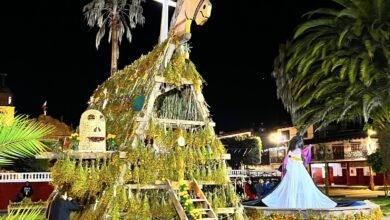
The university article describes offerings for people who died recently, a practice called renueva involving the grave, and different times for remembering children and adults. It also records flowers adorning wooden structures. Yet its main concern brings out something that tourist accounts often overlook: some plant species used in the festivities face ecological pressure.
Honouring a tradition does not mean ignoring the place from which its materials come. If research identifies tensions between celebrations and orchid conservation, an accurate account must mention them without blaming families indiscriminately. Practices documented in one period do not prove current availability or give visitors permission to cut plants in order to recreate an offering.
A date is not permission to enter
A news report in 2026 gave specific visiting times for Zirahuén’s cemetery around October 31 and the first days of November. These were announcements for that edition, not permanent opening hours. Nor were they guarantees that family vigils were public, that photographs were allowed or that regular night transport existed.
To understand Zirahuén, one must distinguish the living community, its cemetery and the tourist economy of the lake. The first is not a picturesque extension of the other two. Visitors must abide by decisions taken by families and community authorities.
A community’s own way of waiting
UNESCO recognizes Indigenous festivities dedicated to the dead in Mexico, not a catalogue prescribing one rite for every place. Zirahuén’s embroidered cloth is better understood as one concrete expression among many ways of welcoming absent loved ones.
When the offering has ended, perhaps the cloth remains. Not because it stopped time, but because someone devoted part of their own time to remembering. That is the strength of this documented practice: it need not compete with the lights on the lake to become deeply visible.
Scope note: This is literary documentary writing based on published accounts. No new interviews, checks of family access or on-site operational verification were conducted. Dated claims are not permanent programmes.
Documentary sources (original titles)
- Saber Más — Universidad Michoacana de San Nicolás de Hidalgo. Tradiciones vs. conservación de orquídeas en Michoacán. 2018 (artículo universitario). Trabajo de campo sobre ofrendas y flores de Zirahuén; registro histórico, no censo de 2026. documentación académica divulgativa.
- Carlos Arrieta / El Universal. En Zirahuén, bordan manteles para recibir a sus muertos. 3 de noviembre de 2019. Crónica fechada de manteles de punto de cruz sobre las tumbas. testimonio periodístico.
- Instituto de Cultura / Visit Michoacán. Lago de Zirahuén. Página institucional sin fecha de edición explicitada. Entorno lacustre; contexto geográfico, sin prueba de ritos. sitio de promoción turística contextual.
- UnoTV. ¿Visitarás un panteón en Día de Muertos en tu estado? Revisa horarios y objetos prohibidos. 28 de octubre de 2026 (según fecha del resultado consultado). Horario atribuido al panteón para edición 2026; anuncio, no garantía futura ni readback de ejecución. aviso periodístico fechado.
- UNESCO. Las fiestas indígenas dedicadas a los muertos (00054). Proclamación 2003; inscripción 2008. Marco patrimonial general; no inscripción exclusiva de Zirahuén. registro patrimonial.
Original Spanish titles and publication details are retained in the bibliography for accurate source identification.