Ihuatzio: remembrance between the lake and the yácatas
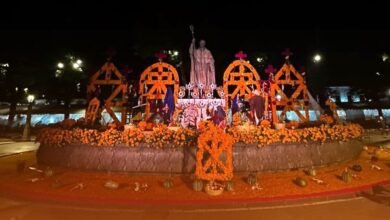
In Ihuatzio, the Festival of Souls belongs to a community whose history reaches far beyond November. On the shores of Lake Pátzcuaro, the town lives alongside the remains of one of the great centres of Purépecha power. Its yácatas evoke an important political and ceremonial past; today’s offerings speak of the bonds families maintain with those who have died.
One of the historic centres of Purépecha power
The National Institute of Anthropology and History (INAH) identifies Ihuatzio, alongside Pátzcuaro and Tzintzuntzan, as one of the principal centres of Purépecha authority. Its archaeological zone preserves raised causeways known as huatziri, squares and monumental structures. This importance should not be confused with a claim that present-day funerary ceremonies have remained unchanged since before the Spanish conquest.
Cultural continuity does not require an exact repetition of earlier centuries. Communities have undergone religious, political, economic and territorial changes that are part of their history, too.
The cemetery and the lives of families
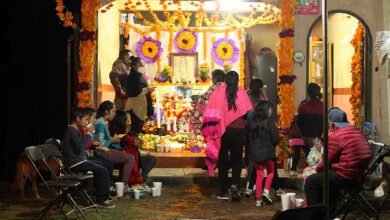
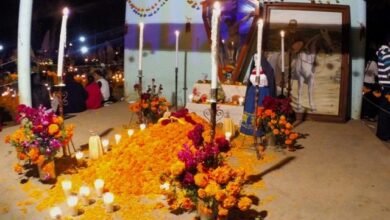
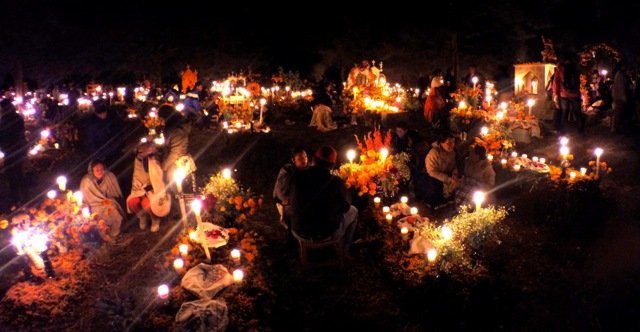
A Quadratín Michoacán report dated November 1, 2017 described vigils in Ihuatzio as relatively quiet gatherings, with families beside illuminated graves and fewer visitors than in some more heavily promoted places. This is a dated journalistic observation; it cannot guarantee silence, unrestricted entry or an absence of crowds every November.
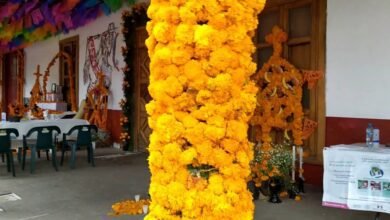
Flowers, candles and offerings for the dead are part of a ceremonial season shared with other communities, although its precise timings and forms vary. Differences between individual homes may matter as much as differences between villages.
A place that need not compete with Janitzio
Calling Ihuatzio a “more authentic” or “less touristy” alternative to Janitzio would diminish both places. A vigil does not derive its value from how many visitors attend. Its meaning belongs to those who organize it, pray, prepare and preserve it.
Visitors should also distinguish cultural visits to the archaeological site from participation in religious activities. Access to the archaeological zone is governed by INAH; access to community and funerary spaces depends on information and decisions from the relevant authorities. A timetable published years ago is not a current permit.
Ihuatzio deserves to be known for both dimensions: the history of an important Purépecha centre and the contemporary life of a town whose memory is expressed in homes, offerings and family gatherings. Neither should become mere scenery for the other.
Documentary sources (original titles)
- Instituto Nacional de Antropología e Historia, ficha oficial de la zona arqueológica de Ihuatzio.
- Quadratín Michoacán, «Silenciosa pero majestuosa Noche de Muertos en Ihuatzio», crónica de 1 de noviembre de 2017.
- UNESCO, «Las fiestas indígenas dedicadas a los muertos», expediente 00054; proclamación de 2003 e inscripción de 2008.
Original Spanish titles and publication details are retained in the bibliography for accurate source identification.