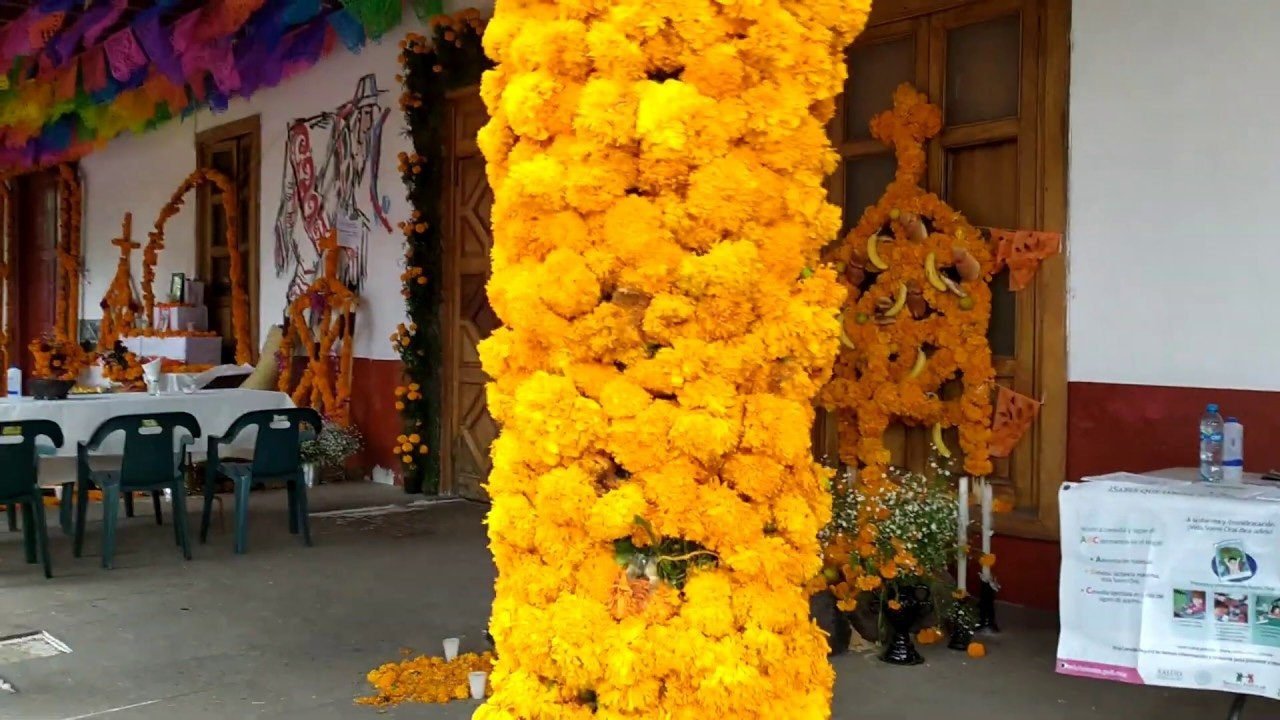
Erongarícuaro: the heart of the lake and the waiting for souls
Some places retain their bond with a lake even when the water no longer reaches as far as it once did. Erongarícuaro is one of them. Its history encompasses a port, a convent, a square and the roads linking lakeside villages. In October, another geography appears, made of flowers, music, food and remembered names. Yet it is important to distinguish two scales of commemoration: what the municipality organizes in public spaces and what belongs to families awaiting their dead.
According to the municipal government’s chronology, the church and convent were built in the sixteenth century, and the municipality was constituted in 1831. These dates help us see Erongarícuaro as a town with its own history rather than merely a stop between Pátzcuaro and other places around the basin. It is not necessary to settle the contested etymology of its name—explained differently in tourist publications—to understand its lasting relationship with the territory.
The arch and the canal: a public celebration with a date
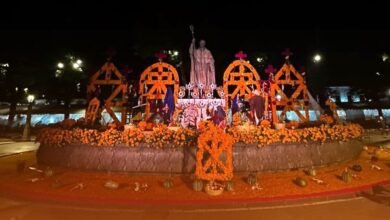
In October 2026, local authorities announced the festival El Despertar del Lago (The Awakening of the Lake), scheduled for October 30 to November 1. According to information released beforehand, the programme included a monumental arch, music, competitions and canoe rides along a restored section of canal. This is a 2026 announcement, not proof of a timeless custom that will necessarily recur in subsequent years.
The canal’s recovery also invites us to think about the festival in the present tense. Remembrance of the lake is not confined to old photographs: it includes transformed spaces, cleaning efforts and contemporary projects. When decorated boats appear in a municipal festival, they form part of a public cultural programme. Their presence does not make them an ancient funerary ritual.
Another kind of waiting does not take place on a stage
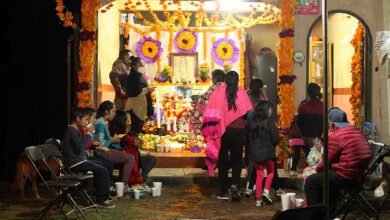
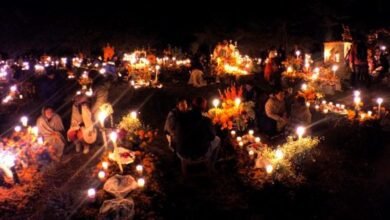
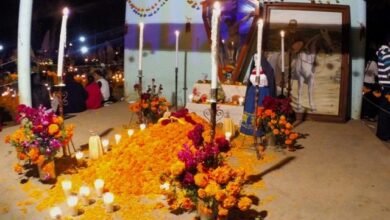
A town square may host dances and crafts, but keeping vigil involves another responsibility: remembering a particular person. Around the lake, family offerings often involve food, flowers and prayer, yet their forms and visitor access vary from village to village and family to family. UNESCO describes a broad Mexican framework for Indigenous festivities dedicated to the dead; it prescribes no uniform protocol for every community.
Arócutin, within the municipality of Erongarícuaro, illustrates why those differences matter. In an October 2026 interview, the mayor stated that Arócutin’s communal authorities establish and safeguard the rules governing vigils. Her remarks support a finding of community autonomy; they do not mean that municipal officials can open ritual spaces at will, or that visitors have unrestricted access.
A visitor to the municipality therefore encounters more than one kind of celebration. There may be a municipal cultural programme and, in other localities under the same jurisdiction, community commemorations with their own authorities, privacy and arrangements. Dances brought in from neighbouring towns likewise retain their distinct histories and calendars.
The taste of being together
Food appears alongside crafts and music in the 2026 announcements. News of a food market or gastronomic corridor does not establish that every dish served there is a ceremonial offering. Food prepared for a public gathering and food placed in intimate family remembrance can both matter, but they serve different purposes.
A fair can provide work for musicians, cooks, producers and craftspeople. Its economic value need not diminish the commemoration, provided a clear distinction remains between activities organized for an audience and actions belonging to those who mourn.
To visit is also to recognize limits
An October programme is not proof that every announced activity actually took place, nor is it a timetable for subsequent editions. Before approaching a cemetery or community ceremony, visitors should consult the appropriate authorities and follow their directions. Attendance estimates, supposed access privileges and claims about “every village’s traditions” should not be repeated as current guarantees.
In Erongarícuaro, a recovered canal and the memory of absent loved ones meet. The editorial task is to keep these waters distinct: one celebrates a public gathering; the other accompanies the quiet expectation within each home.
Editorial note: Oral accounts are situated testimonies, not direct reconstructions of the distant past. Announced 2026 tourism programmes do not establish future events or access. No new interviews or site visits were conducted.
Documentary sources (original titles)
- Gobierno municipal de Erongarícuaro. Cronología de hechos históricos. Cronología municipal: templo, convento y municipio; atribución institucional, no reconstrucción académica completa. Clasificación: institucional/historia.
- Mauricio Castro Álvarez, PostData News. Erongarícuaro alista festival de Noche de Ánimas. 16 de octubre de 2026: declaración del municipio sobre festival, fechas y actividades. Clasificación: crónica/programa 2026.
- Luis Felipe Reynoso, Quadratín Michoacán. Preserva Erongarícuaro sus tradiciones ante el turismo masivo. 16 de octubre de 2026: atribuye a la alcaldesa la autonomía comunal de Arócutin. Clasificación: entrevista institucional en prensa.
- Redacción, La Página Noticias. Tendrá Erongarícuaro festival de Noche de Ánimas «El Despertar del Lago». 16 de octubre de 2026: anuncio del 30 de octubre al 1 de noviembre. Clasificación: programación fechada.
- UNESCO. Las fiestas indígenas dedicadas a los muertos (expediente 00054). Inscripción general de México de 2008; no acreditación individual de cada celebración. Clasificación: patrimonio/marco general.
Original Spanish titles and publication details are retained in the bibliography for accurate source identification.