Reading the lake before choosing a path
On a map, Lake Pátzcuaro looks like a stretch of water ringed by settlements. In the memories of the people who live around it, however, not every shore leads to the same place. An island, a square, a workshop and a cemetery may be close together in distance but far apart in meaning. Any account of routes during the Day of the Dead must therefore begin with a warning: a territory is not an itinerary that gives us permission to witness everything that happens there.
The Festival of Souls is lived by communities and families who remember their dead in different ways. Some preparations can be seen from public spaces; others unfold in homes, churches and burial places whose intimacy does not belong to visitors. These pages suggest ways of understanding cultural differences, not an official circuit or a promise of access.
Pátzcuaro: a city from which to read the landscape
Pátzcuaro retains arcades, squares, religious buildings and streets where part of Michoacán’s urban history can be studied. Mexico’s National Institute of Anthropology and History (INAH) documents the city’s historic monuments zone and changes to its colonial urban layout. This public heritage helps explain transformations of the region, but it does not make the city the owner of every community’s commemoration.
The first distinction is between urban public life and a family’s remembrance of someone who has died. An exhibition, craft market or cultural performance may take place during the season without replacing a prayer or a household offering. The city can raise questions: How is it connected to lakeside communities? Who tells its history? Which voices are heard, and which disappear behind a tourist postcard?
Tzintzuntzan: layers of history in one landscape
Tzintzuntzan was a principal political center of the pre-Hispanic Purépecha polity. Its archaeological zone and yácatas belong to a different historical period from the contemporary vigils held by families. INAH records the monumental past; Mexico’s Cultural Information System records traditions associated with remembrance of the dead. Neither source automatically grants access to a cemetery or sets a permanent program.
Archaeological remains and present-day offerings can be studied in relation to one another, but should not be mistaken for the same practice. Between them lie centuries of conquest, evangelization and community change. An attentive visitor sees not a ceremony frozen in time, but a population continuing to give meaning to its own history.
The islands: there is no single Day of the Dead
Janitzio has an important place in popular imagery of the lake celebration. Yet its public visibility is no reason to treat other islands as lesser versions of Janitzio. Yunuén, La Pacanda and Jarácuaro have histories, narratives, inhabited spaces and community organizations that deserve recognition on their own terms.
Boat travel is a geographical reality of island life, not a guarantee of permanent tourist transport. The possibility of landing, staying, entering ceremonial spaces or taking photographs depends on conditions and agreements to be checked for each edition. We provide no assumed docks, schedules or services. The lasting principle is to remember that an island is a living community before it is a nighttime backdrop.
The shore: different families, memories and crafts
Other places around the lake are no more interchangeable. Ihuatzio, Santa Fe de la Laguna, Arócutin, Erongarícuaro and neighboring settlements have their own histories, community authorities and ways of mourning. Listing them does not create a legitimate “vigil route.” Nor does participation in a commemoration imply that households welcome sightseers.
In Cuanajo, dated journalistic testimonies associate wooden horses with the symbolic language of family offerings. This is a local feature, not a binding rule throughout the basin. Tócuaro is known for carving masks used in several festive repertoires, including Christmas-season shepherd plays; the masks must not be recast as a universal funerary rite. Capula, outside the lake shore, brings the history of its pottery workshops and clay Catrinas. Craft sales and family vigils are different kinds of activity.
The region’s most useful cultural orientation is to understand that each encounter calls for a different question, and that an answer from one community must not be imposed on another.
Three ways of understanding, not three travel routes
A historical reading can link the former Purépecha polity, colonial transformations, and public spaces in Pátzcuaro and Tzintzuntzan. This is a proposal for study, not a list of open entrances or a journey of guaranteed duration.
A reading of community memory explores the meanings of offerings, food, flowers, candles and stories of remembrance. UNESCO sources explain the social role of these practices without erasing local diversity. This does not mean walking from house to house or observing grieving families as though they were on display.
A reading of crafts and creation can introduce readers to woodcarving, pottery, textiles and other work that supports the region’s economy and identity. Workshops and fairs offered in any given year must be identified in verifiable announcements; crafts do not need to be disguised as funerary ceremonies to justify their cultural importance.
None of these perspectives is an official tourist route, a transport service, a certified map or an event program. They are ways to organize questions before planning a visit.
Respect is a form of orientation
A commemoration may include silence, conversation, prayer or shared meals. Respect means more than speaking quietly: do not touch altars or offerings, move objects for a photograph, or come between a family and a grave. Ask permission before photographing people; special discretion is needed around children and families in mourning.
Community authorities and residents have the final say on access to local spaces. If an area is reserved for relatives, or photography is prohibited, those decisions must be respected. Public recognition of a celebration does not make every intimate space public.
Information that changes belongs on another page
The commemoration has an annual calendar, but practical arrangements change. Transport, road maps, safety measures, closures, workshops, access conditions and times must be checked against attributable notices for the relevant edition. Reusing a previous year’s information, or treating publicity as a permanent right of entry, is irresponsible.
This page has a different purpose: to help readers see the lake without claiming it as their own. Perhaps the best path is one that leaves room to understand why some candles should be viewed from a distance, and why a community’s history does not begin when a visitor arrives.
Sources and reading notes
- UNESCO. Indigenous festivity dedicated to the dead in Mexico, file 00054. Commemoration, offerings, social role and diversity; no travel routes. Institutional heritage record.
- INAH, Places. Pátzcuaro. Historic center and its cultural heritage, not a vigil program. Heritage record.
- INAH, Places. Tzintzuntzan archaeological zone. Purépecha political history; distinct from cemeteries and family rites. Institutional archaeological record.
- Cultural Information System, Mexican Ministry of Culture. Day of the Dead in Tzintzuntzan. Cultural record updated in 2021, not current access arrangements. Historical cultural record.
- Michoacán Ministry of Culture. Guidance for experiencing the Day of the Dead respectfully in Pátzcuaro and Tzintzuntzan. Dated 2025; enduring guidance, not a new year’s schedule. Dated institutional notice.
- National Institute of Indigenous Languages (INALI). Atlas of Mexico’s Indigenous Languages: Purépecha. Language, territory and organizational diversity. Institutional record.
Editorial scope: Documentary research without new interviews. Historical interpretations are not presented as first-hand accounts from contemporary communities. No photographs or other media from the published post are included.
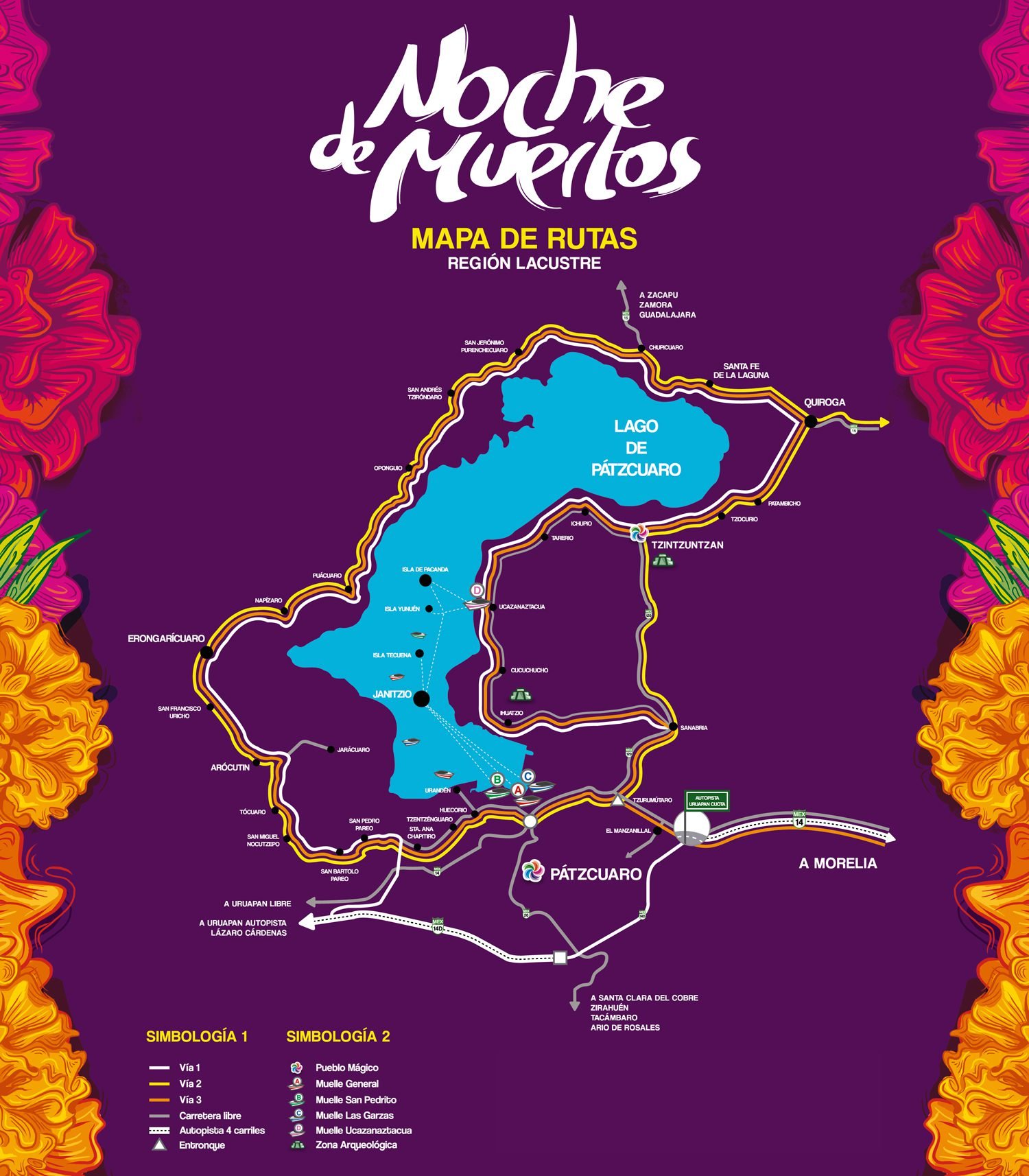
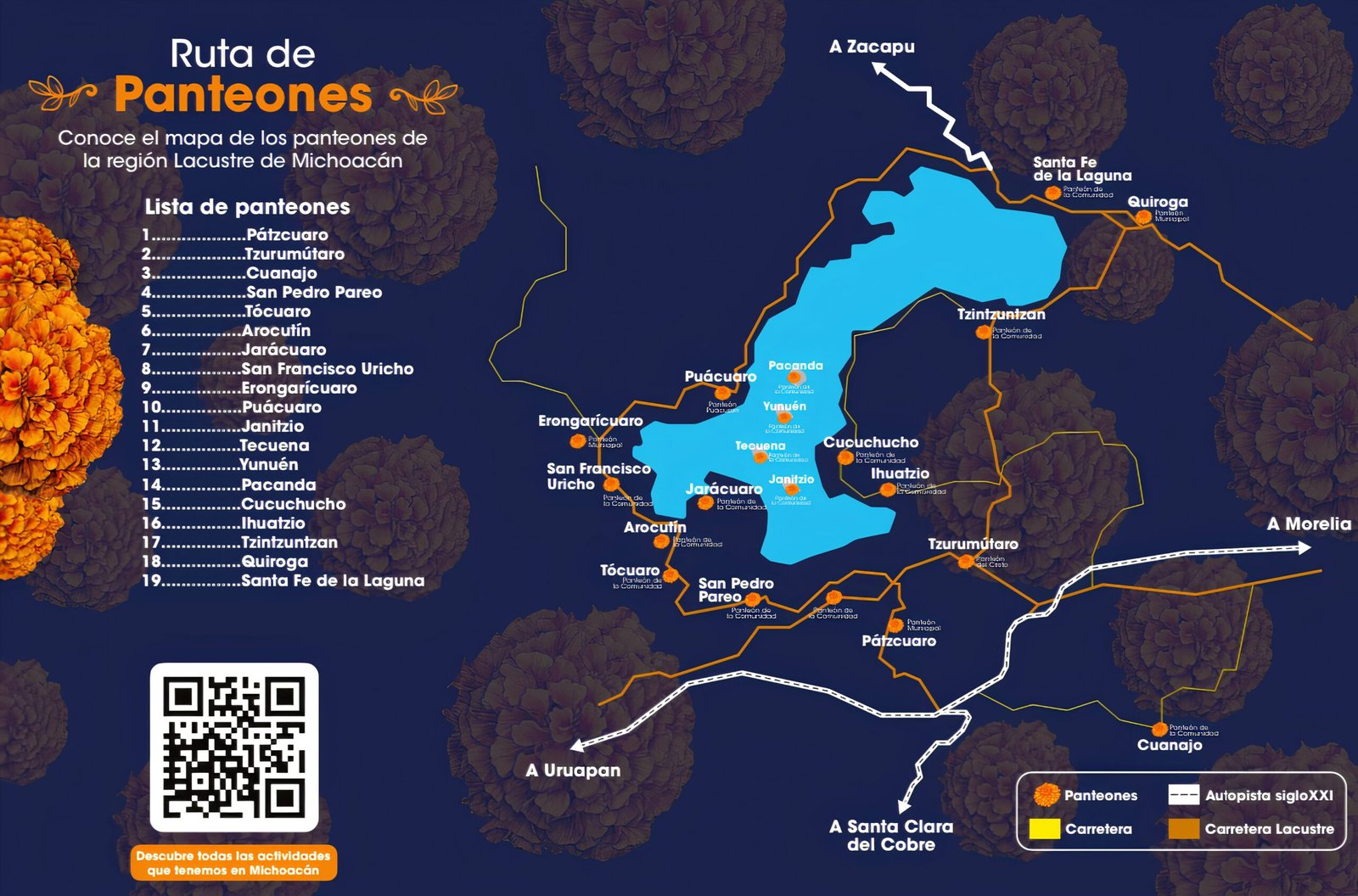
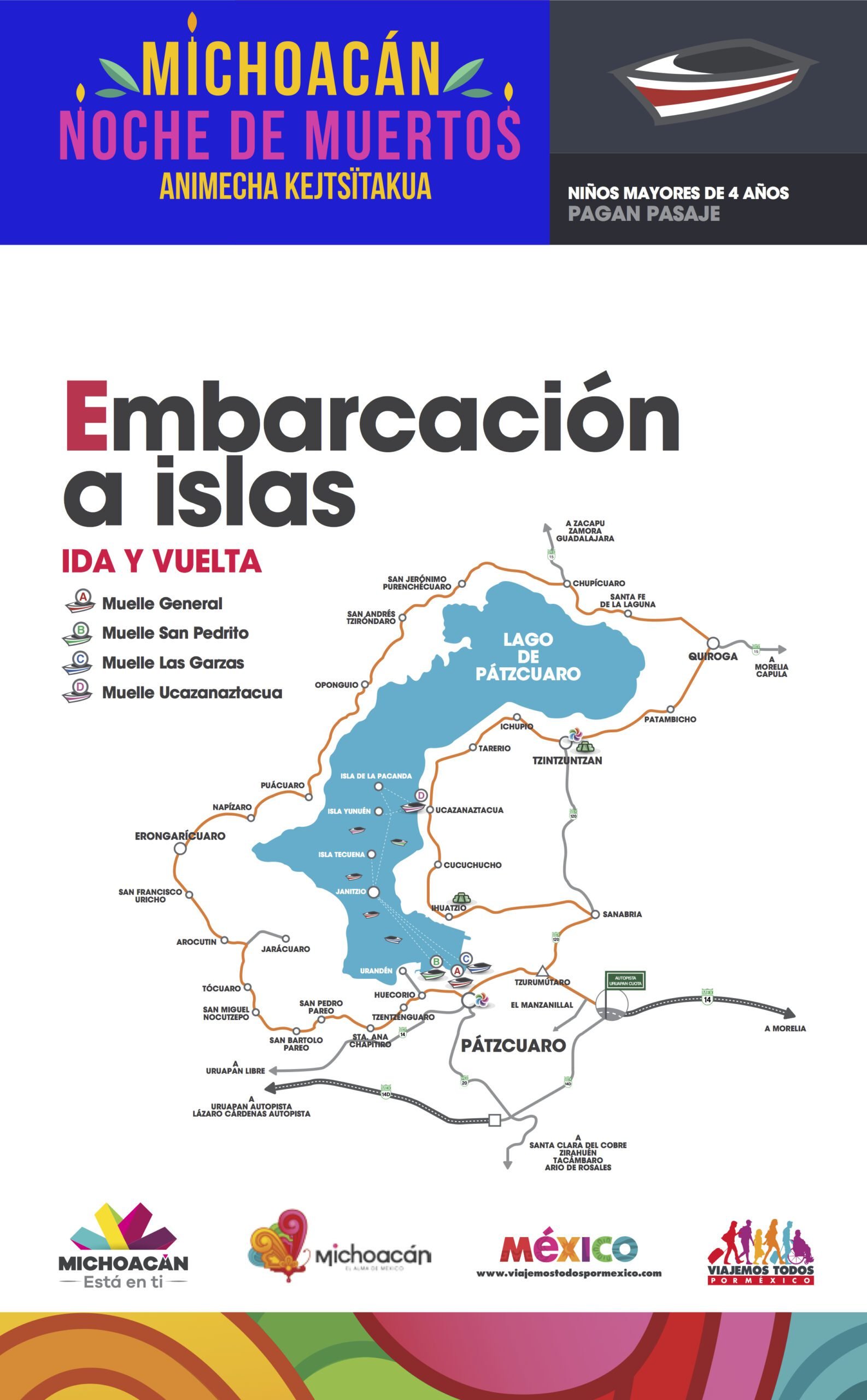
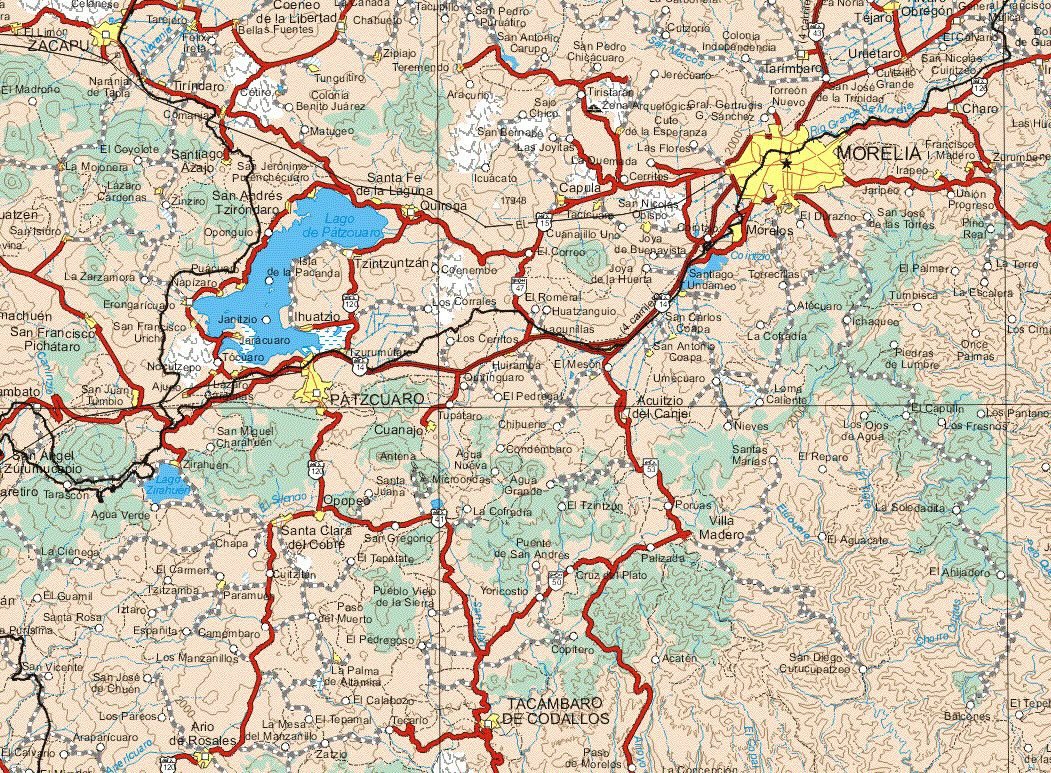
Archived maps retained from an earlier version, separate from the editorial manuscript. Not current access or traffic guidance.