Arócutin: the cemetery beside the church and the waiting for souls
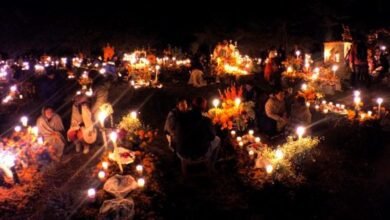
What makes Arócutin distinctive can be seen before nightfall. Its cemetery lies beside the Church of Santa María de la Natividad, where religious architecture, community life and funerary remembrance remain closely connected. This arrangement helps explain the Festival of Souls without reducing it to a candlelit scene.
A place of history and gathering
In 2013, historians Gabriela Servín Orduño and Cindy Vanessa Olvera Camacho included Arócutin in a comparative study of three Purépecha cemeteries around the lake. They examined the funerary landscape as the product of social relationships, beliefs and historical transformation. They were not studying a backdrop, but the meanings a place acquires for people who bury and remember their dead.
A Michoacán government statement from November 2021 also records the burial ground’s location in the atrium of the Church of Santa María de la Natividad and the continuing practice of vigils for the departed.
Flowers and collective work
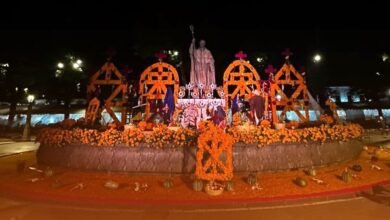
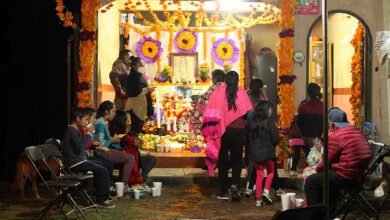
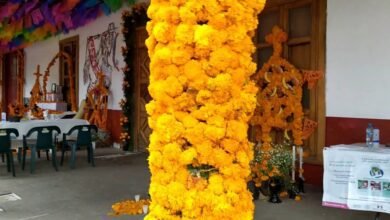
Marigolds, candles, food and floral arches are among the things families prepare at this time. Building an arch calls for work and coordination. Reports from different years describe a particularly large one associated with the entrance to the cemetery. Yet no specific number of people required to raise it should be repeated as a permanent fact without testimony from the relevant year.
With graves so close to the church, caring for the space matters especially. The cemetery’s location, documented across different years, does not authorize claims of unrestricted access at all hours. Visiting conditions and schedules may change.
The responsibilities of those who watch
A local report from October 2026 describes Arócutin’s vigil chiefly as a family and community occasion. Visitors need not enter a private ceremony to understand its importance. They can learn the place’s history and observe discreetly where residents and authorities allow.
Arócutin deserves a story that does not call it the region’s “purest” cemetery or market graves as attractions. Its distinctive quality is the community’s relationship with its own religious and funerary landscape, preserved and transformed over time.
Documentary sources (original titles)
- Gabriela Servín Orduño y Cindy Vanessa Olvera Camacho, «El paisaje de los muertos: tres cementerios purépechas de la región lacustre de Michoacán», Cambios y Permanencias, núm. 4, 2013, pp. 370-391.
- Gobierno de Michoacán, visita al Templo de Santa María de Natividad y su cementerio en el atrio, Arócutin, 1 de noviembre de 2021.
- TV Azteca Michoacán, «Templo de Arocutín … Noche de Muertos», nota de octubre de 2026 sobre velaciones comunitarias.
- UNESCO, «Las fiestas indígenas dedicadas a los muertos», expediente 00054, inscripción de 2008.
Original Spanish titles and publication details are retained in the bibliography for accurate source identification.