Janitzio: the island, remembrance and the Festival of Souls
The glow of candles, the lives of families and their relationship with the lake have made Janitzio one of the best-known images of the Day of the Dead. To understand what the occasion means, however, we must look beyond that image and respect the community’s decisions.
As night falls over Lake Pátzcuaro, lights rise among the houses of Janitzio. On the way uphill, everyday life is still visible: residents returning home, businesses at work, arriving visitors and conversations as the commemoration approaches. This is first and foremost an inhabited island, not a tourist picture.
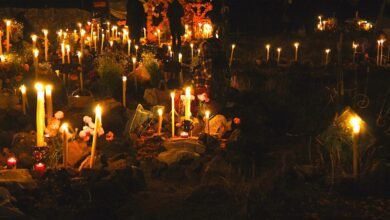
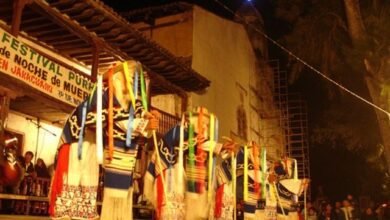
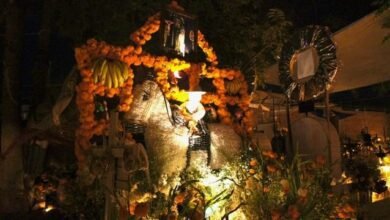
The Festival of Souls brings together community practices of religious and family remembrance. Offerings are not assembled for visitors. According to each family’s beliefs, they are a way of remembering and welcoming those who have died. Flowers, food, candles and personal possessions become part of a conversation between generations.
The lake and its boats
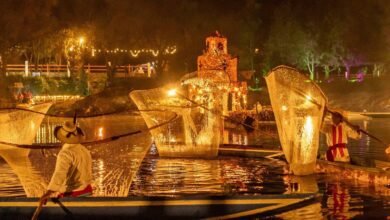
Canoes and butterfly-shaped fishing nets have long formed part of the lake’s visual history and the work of its fishers. During the season, cultural performances and displays featuring illuminated boats may be organized for audiences. Such presentations must be distinguished from family observances: not every scene photographed during the festivities is a community ritual, and not every vessel belongs to an enduring nighttime procession.
The lake is both a means of access and a workplace. Weather, navigation conditions and the organization of the docks affect transport. Boat departures must therefore be checked with operators and the relevant authorities for the actual date. This guide cannot promise a 24-hour boat service.
The cemetery and families’ right to keep vigil
Keeping vigil beside graves is central to the remembrance practices of Janitzio. Families prepare offerings and accompany their loved ones in a ceremony whose significance does not depend on spectators. Silence, prayer and the presence of relatives and neighbours accompany candlelight and food set out in memory of the dead.
Exceptional access notice — 2026 edition, updated November 2. Janitzio does welcome visitors for the 2026 Day of the Dead, but the cemetery is closed to the general public because of rehabilitation work. Island families retain access for their vigils. Michoacán’s Tourism Secretariat announced an outdoor observation area and cultural activities elsewhere on the island. Respecting the closure does not prevent visitors from experiencing Janitzio; it allows private commemoration to continue while the work proceeds. This measure applies only to 2026. Access rules for subsequent years must be checked afresh.
Planning a considerate visit
Janitzio has steep streets and stairways. The season may bring crowds, boarding queues, or operational changes caused by wind and fog. Plan sufficient time for your return; bring warm clothing, secure footwear and cash for services that do not accept cards. Confirm your departure dock, fares, timetable and return arrangements before boarding.
On the island, people and offerings are not scenery. Do not block passageways, use flash or intrusive lighting, touch items on altars, or photograph faces and intimate ceremonies without consent. A memorable visit does not require entering a family’s private space.
Janitzio is moving precisely because the observance was not invented for tourists. Its residents continue to make remembrance a living practice. That continuity deserves care as well as recognition.
Editorial note: The cemetery restriction is a dated 2026 exception. Do not extend it, or the transport information, to later editions without confirmation.
Documentary sources (original titles)
- Secretaría de Turismo de Michoacán — «Janitzio está listo para recibir a turistas en Noche de Muertos» (27 de octubre de 2026). Acceso a la isla, cierre excepcional del panteón y actividades.
- Secretaría de Turismo de Michoacán — «Noche de Muertos en Janitzio tendrá altares monumentales y actividades tradicionales» (21 de octubre de 2026). Alcance temporal de las obras.
- Secretaría de Cultura de Michoacán — «Noche de Muertos en la región Lacustre, la Cañada y la Ciénega» (2012). Contexto regional de la velación.
- UNESCO — Las fiestas indígenas dedicadas a los muertos. Marco patrimonial de las conmemoraciones indígenas de México.
Original Spanish titles and publication details are retained in the bibliography for accurate source identification.