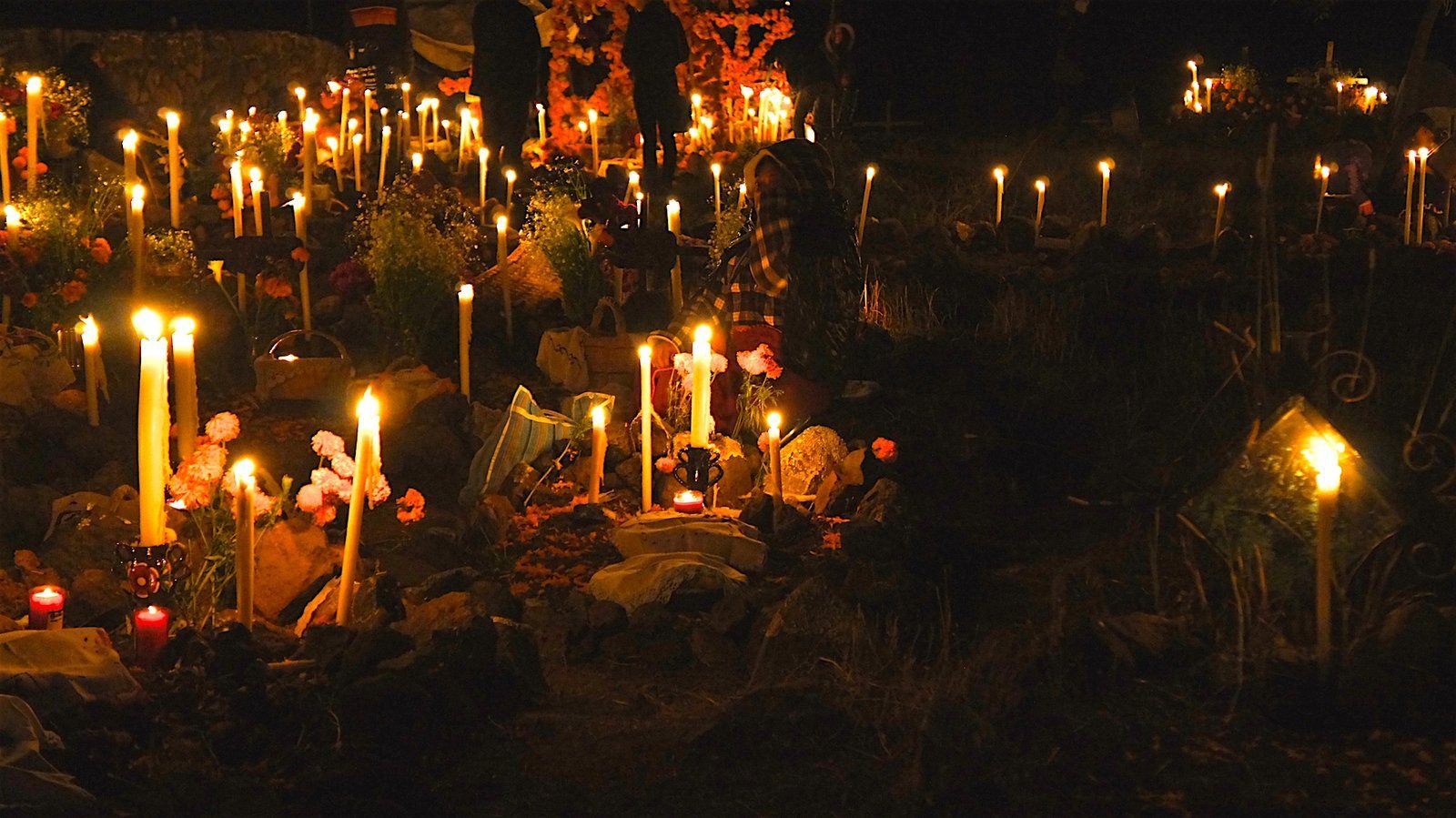
Vigils for adult souls: waiting and family remembrance
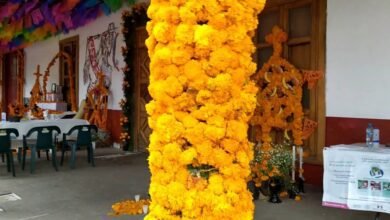
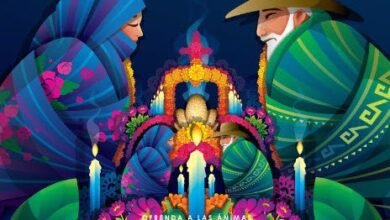
Around Lake Pátzcuaro, keeping vigil for the souls of adults is a way of accompanying those who are no longer present. It is not confined to the glow of a cemetery. It begins at home, with cooking, preparing a floral arch or altar, family conversation and the names spoken once again.
Waiting begins before nightfall
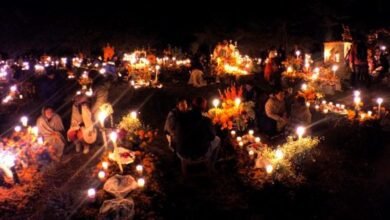
November 1 and 2 are central to many commemorations, although arrangements differ among communities. In some homes, prayers and preparations extend over several days. When remembering someone who died recently, the first offering may involve special efforts by relatives and godparents. Elsewhere, the vigil takes place mainly around the family altar and does not require spending an entire night in a graveyard.
Such variety challenges the notion of one ceremony practised identically throughout the basin. UNESCO’s description of Indigenous festivities dedicated to the dead in Mexico includes family altars, paths of flowers and offerings at graves. Differences between places are part of the tradition, not imperfections to be corrected.
The material work of memory
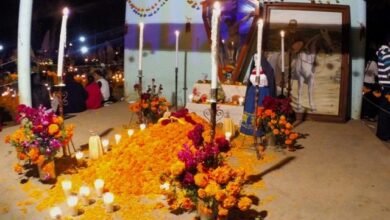
Seasonal flowers, bread, fruit, water, candles, copal and home-cooked dishes appear repeatedly in accounts of regional offerings. Photographs, clothing or tools associated with the deceased may be included as well. No object speaks entirely for itself: its meaning depends on the family and the circumstances in which it is placed.
In Santa Fe de la Laguna, explanations provided by tradition bearers Guadalupe Hernández Dimas and Ireri Gabriela Huacuz Dimas, reported by the Michoacán Secretariat of Culture in October 2026, describe the decorated arch, the arrangement of offerings and the community gathering. Their account should be read as knowledge from a particular place, not as a universal description imposed on every village.
Home, cemetery and community
In some localities, families remain beside graves for part of the night. Elsewhere, remembrance moves between home, church and cemetery. The difference is not a ranking of communities, nor evidence that some are more authentic than others.
Visitors may be present alongside ceremonial life, but do not define it. A family praying beside a grave is not necessarily inviting strangers to take part. Tourist routes, altar exhibitions and public performances are distinct from domestic and funerary vigils.
The Festival of Souls brings together mourning, companionship and continuity. Visitors can appreciate its cultural depth by accepting a simple principle: ritual spaces have their own caretakers, boundaries and times. The purpose is not to get as close as possible to an offering, but to understand its significance and respect those who sustain it.
Documentary sources (original titles)
- UNESCO, «Las fiestas indígenas dedicadas a los muertos», expediente 00054; proclamación de 2003 e inscripción de 2008.
- Instituto Nacional de los Pueblos Indígenas, «¿Conoces el significado de los elementos de una ofrenda de Día de Muertos?», 23 de octubre de 2019.
- Secretaría de Cultura de Michoacán, «Secum acercará el simbolismo de la ofrenda purépecha al Museo del Estado», 27 de octubre de 2026; información de portadoras de tradición de Santa Fe de la Laguna.
- Gobierno de Michoacán, «Panteones de Michoacán se iluminan para recibir a las ánimas en Noche de Muertos», 1 de noviembre de 2026.
Original Spanish titles and publication details are retained in the bibliography for accurate source identification.